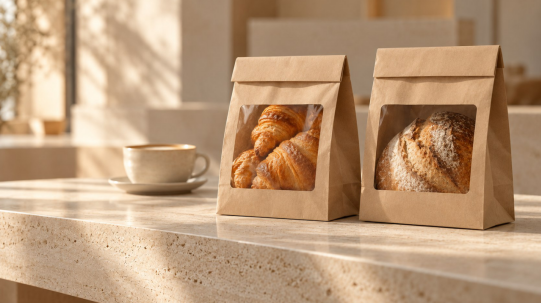
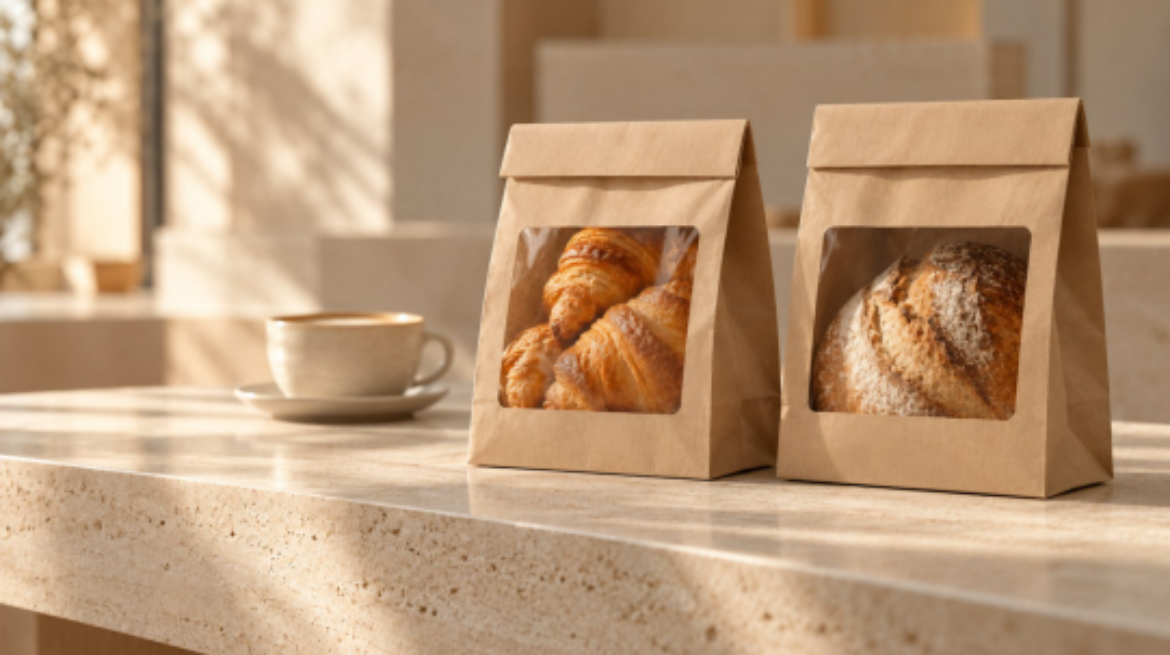
By eight in the morning, the counters of Dubai’s bakeries and cafés are full: trays of croissants, loaves of sourdough, cookies and cinnamon rolls, and a queue of customers taking them away in paper bags. The bag gets a few seconds of attention at the counter, yet it decides how the product looks when it reaches the office, the car or the kitchen table at home.
For bakeries and cafés, choosing the right bag is less about finding one perfect option and more about matching the bag to the product.
Grease: the first test
Butter is what makes a croissant worth buying, and it is also what marks a paper bag. A light pastry in a thin bag can leave translucent spots within minutes, which makes even a fresh product look tired.
There are a few ways to handle it. Grease-resistant paper slows the oil down and keeps the outside of the bag clean. A small sheet of greaseproof paper under the pastry works for single items. For the richest bakes, such as pain au chocolat or almond croissants, a slightly heavier paper simply holds up better. Most bakeries work with paper of around 70–80 gsm: light enough to fold in a second at the till, firm enough for nearly everything on the shelf.
Steam: why warm bakes need room to breathe
Bread and pastries that come straight from the oven are still releasing moisture. Sealed tightly in a bag, that steam condenses on the inside and softens both the paper and the crust. A crisp baguette can turn chewy on the way home.
The answer is not to close warm products too early. Leave the top of the bag folded loosely rather than sealed, and use bag shapes that give the product some air. Long bread bags for baguettes and open-top bags for loaves are designed with this in mind. Customers who take warm bread home will notice the difference in the crust.
The right size and shape
One bag size for everything is tempting, but it rarely works well. A single cookie in a large bag slides around and breaks. A family order squeezed into a small bag crushes the pastries on top. Most bakeries do best with a short range:
- Small flat or V-bottom bagsfor single pastries, cookies and sandwiches.
- Long narrow bagsfor baguettes and long loaves.
- Block-bottom bagsthat stand up on their own for larger orders, boxes of pastries and bread that should not be squashed.
A bag that stands upright on the counter is also faster for staff to fill during the morning rush.
The window that sells
Baked goods sell on looks, and paper bags with a window let them keep selling after they leave the display case. Through the clear panel the customer sees the golden crust of a loaf or the layers of a pastry, with the bakery’s name printed right beside it.
Window bags are especially useful for products sold pre-packed: cookies on a grab-and-go shelf, bread in a café fridge, or gift sets of pastries during Ramadan and the festive season. Shoppers can check exactly what they are buying without opening anything.
Freshness and storage
Paper bags help baked goods stay pleasant to eat because paper lets moisture escape gradually. The bags themselves also need care. Store them in a dry, stable place away from ovens, dishwashers and the steam of the kitchen, and keep opened packs closed. In Dubai’s humid months, bags kept near a kitchen door can soften before they are even used.
Branding at the counter
For many bakeries, the paper bag is the most visible piece of branding they have. It travels to offices, schools and homes every day. A clear logo, a consistent colour and a simple design make the bag recognisable on the street and in photos. Some cafés add a short line about their bakers, their flour or their opening hours. Small touches like a sticker seal or a printed thank-you message make an everyday purchase feel cared for.
A quick checklist for bakeries and cafés
- Match grease resistance to the richness of the product.
- Let warm bread breathe; do not seal it straight from the oven.
- Use two or three sizes and shapes instead of one bag for everything.
- Use window bags where the product sells itself.
- Keep bag stock dry and away from kitchen steam.
- Make the logo clear enough to be recognised from across the street.
A good bakery spends hours getting every bake right. The bag it leaves in should protect that work for the few minutes or hours until it is eaten, and remind the customer where it came from.