Coordinating lunch for a mixed-diet team shouldn’t feel like running procurement and a peace summit at the same time. The secret isn’t louder polls or longer menus—it’s a template you reuse every week. When the rules are clear and the choices are bounded, people eat better, meetings start on time, and leftovers stop haunting the office fridge.
Step 1: Set the three non-negotiables
Time window. Aim for 12:15–12:45. It skirts the worst of the queues, gives late joiners a chance to grab food, and protects 1 p.m. meetings from sliding.
Per-head range. Publish a number (e.g., “AED X per person”). Don’t hide it; transparency kills scope creep.
Dietary matrix. Commit to covering veg/vegan, dairy-free, and gluten-friendly at every order. That promise prevents last-minute scrambling and keeps trust high.
Document these in a one-page “Lunch SOP” and pin it in the team channel.
Step 2: Standardize the formats that actually travel
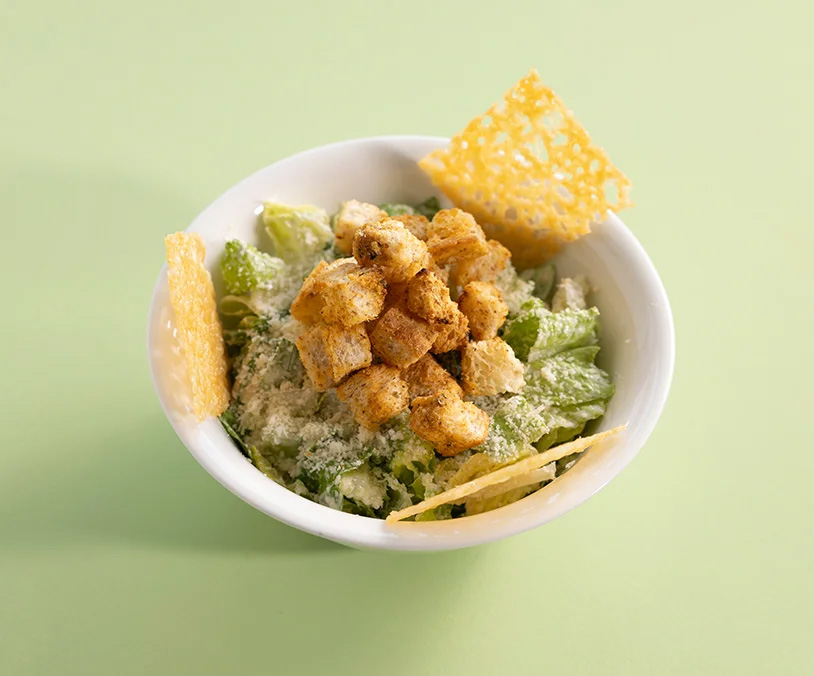
Office lunches succeed or fail on transport. That’s why the winning formats are bowls and salads: compact, stackable, easy to label, and forgiving if a meeting runs five minutes over. Hot sandwiches and sloshy pastas photograph nicely but commute poorly; keep them for celebratory Fridays.
Step 3: Run three presets—every time
Presets reduce decision fatigue without killing choice. Use this trio as your weekly backbone:
- Classic – balanced base, lean protein, bright dressing.
- High-Protein – rice (or double greens), chicken or beef, seed crunch.
- Veg-Forward – greens/cauliflower, falafel or paneer, herb finish.
Individuals can tweak one element (swap protein, change heat level), but the structure stays. That small constraint keeps distribution quick and waste low.
Step 4: Design for five-minute distribution
Label the lids with three bits of info in large text: Protein | Dressing | Allergens. Add a color-dot (blue = Classic, green = Veg-Forward, red = High-Protein). Put a tiny legend on the tray. Now anyone can scan, grab, and go in seconds—no committee huddles over unlabeled containers.
Step 5: Pair with beverages that behave
Skip sugar bombs that spike and crash. Offer one crisp option (citrus, apple-ginger, or carrot-forward) and plenty of water. Bright acidity keeps flavors lively and meetings alert.
Step 6: Close the loop with data, not debates
After lunch, send a 30-second pulse:
- Portion (Too little / Just right / Too much)
- Freshness (Stellar / Fine / Needs work)
- Favorites (Top pick this week)
Use the results to rotate next week’s presets. No open-ended questions, no bikeshedding—just signals you can act on.
Step 7: Budget guardrails that people accept
- Anchor price with your Classic preset and let High-Protein float +AED 3–5 while Veg-Forward floats –AED 3–5. Net effect: you stay on budget without nickel-and-diming.
- Scale fees by headcount tiers (10, 25, 50). Book to the nearest tier and pad +10% in case three surprise guests appear—because they will.
Step 8: A rotation that doesn’t get old
Week A
- Mon: Classic (greens + chicken, mild heat)
- Tue: High-Protein (rice + beef, medium heat)
- Wed: Veg-Forward (cauliflower + falafel, hot)
- Thu: Classic (rice + chicken, lemony dressing)
- Fri: Team pick (winner from the week’s pulse)
Week B
- Mon: Veg-Forward (greens + falafel, mint)
- Tue: Classic (greens + chicken, seeds)
- Wed: High-Protein (rice + chicken, medium)
- Thu: Classic (half rice/half cauli + beef, mild)
- Fri: Light Classic (greens + chicken, lemon on side)
Repeat A/B. Familiarity cuts waste; small swaps keep interest.
Step 9: Scripts you can paste into the order form
- Classic preset
“Base: greens | Protein: chicken | Finish: seeds + parsley | Heat: mild | Dressing on the side.” - High-Protein preset
“Base: basmati | Protein: beef | Finish: seeds | Heat: medium | Add lemon wedge.” - Veg-Forward preset
“Base: cauliflower | Protein: falafel | Finish: seeds + mint | Heat: hot | Add pickles.”
These read the same across vendors, so hand-off is never lost in translation.
Step 10: Troubleshooting (because real offices are messy)
- Everyone is suddenly ‘watching carbs’. Shift Classic to greens, keep High-Protein on rice for those who need heft.
- Leftovers are chronic. Portions are too big or the menu is too same-y. Drop portion size one notch and rotate a new protein weekly.
- Distribution bottlenecks. Your labels are too small or inconsistent. Print larger, standardize wording, keep dots visible from a meter away.
- Budget creep. Freeze add-ons (no à-la-carte wander). If something must be extra, make it a team-wide upgrade, not one-offs.
Step 11: Scale from 10 to 50+ without chaos
- Batch by teams. Order the same three presets for each function (Sales, Ops, Product), not one massive mixed tray.
- Stagger arrivals by five minutes to avoid lobby pileups.
- Assign a “lunch host.” Five minutes of pre-meal sorting beats twenty minutes of post-arrival confusion.
Step 12: Pick a provider that already thinks this way
You don’t need to reinvent the category. Choose a vendor with modular builds, short ingredient lists, and locations that make pickup or delivery predictable. For a Dubai-friendly baseline on formats and logistics, start with boga superfoods dubai to confirm nearby outlets and ordering flow. Then cherry-pick modular combinations from boga salad to cover Classic, High-Protein, and Veg-Forward in a single click.
The one-page Lunch SOP (copy/paste)
- Window: 12:15–12:45
- Budget: AED ___ per head (± AED 5 swing by preset)
- Coverage: Classic / High-Protein / Veg-Forward (veg/vegan, dairy-free, gluten-friendly always available)
- Formats: Bowls + Salads only
- Labeling: Protein | Dressing | Allergens + color dot (blue/green/red)
- Feedback: 30-sec pulse after each order
- Rotation: Week A / Week B, then repeat
Pin that SOP, stick to it for three weeks, and watch the noise drop. The magic isn’t in a perfect menu; it’s in repeatable structure. When lunch runs on rails, afternoons run on time—and people actually look forward to what’s on the tray.